
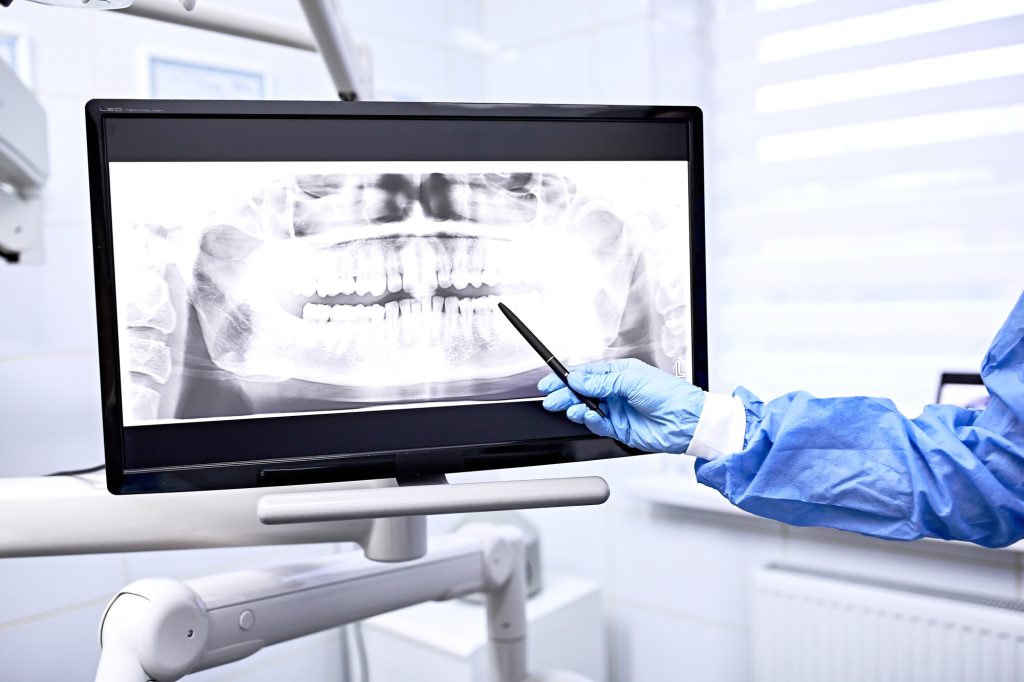
A trip to the dentist often involves more than just a cleaning and a checkup. Another cornerstone of your treatment is regular dental X-rays.
Since many oral health issues can start beneath the surface of our teeth and gums, X-rays are an invaluable diagnostic tool. While dental X-rays are one of the most common procedures in dentistry, you may still have questions. Which is great, because we have answers!
What are Dental X-rays?
Dental X-rays are similar to regular X-rays that you may have of other body parts, but they are relatively small images of your mouth. These X-rays use a small amount of radiation to capture detailed pictures of your teeth, roots, jawbone, and surrounding structures. These images help identify problems that aren’t visible on the surface, such as small or hidden cavities, bone loss, infections, or impacted teeth.
Why do I Need Dental X-rays?
X-rays help us detect issues early, often before you experience any symptoms. Catching problems like tooth decay, gum disease, or bone infections in their early stages means simpler, less expensive treatment. X-rays can also help us plan procedures like dental implants, root canals, or orthodontic work with greater precision.
Do Dental X-Rays Hurt?
No, dental X-rays are completely painless. You might feel slight discomfort from the positioning of the X-ray sensor in your mouth, but the procedure itself doesn’t cause any pain. The entire process typically takes just a few minutes, and we will work to make you as comfortable as possible.
How Many X-rays Will I Need in One Visit?
The short answer is that it depends. If it’s your first visit to a new dentist, you may need a full set of X-rays to establish a baseline of your oral health, which may include 14-18 images. During a routine checkup or if you have a specific complaint, you will likely require fewer. But don’t worry, X-rays are quick, usually taking only about 15-20 minutes, even for a full series.
Do I Need X-rays at Every Dental Visit?
Not necessarily. The frequency of dental X-rays varies based on your age, oral health, and risk factors. Adults with good oral health typically need x-rays every one to two years. If you have a history of gum disease, frequent cavities, or other dental problems, we might recommend more frequent X-rays to monitor your condition.
Are Dental X-rays Safe?
Modern dental X-rays are considered extremely safe. The equipment uses extremely low levels of radiation – comparable to the radiation you naturally receive from your environment in a single day.
Additionally, we use lead aprons to protect your body from any unnecessary exposure. The benefits of catching dental problems early far outweigh the minimal risks associated with the small amount of radiation used.
Can I Eat Before a Dental X-ray?
Yes, you can eat normally before having dental X-rays taken. There are no dietary restrictions before this procedure. However, it’s a good idea to brush your teeth before your appointment so your mouth is clean for the X-ray images and any examination that follows.
Can I Get Dental B-rays if I have braces?
Patients with braces still need regular dental X-rays to monitor tooth and bone health during orthodontic treatment, and it is totally safe. Your provider will position the X-ray equipment carefully to get clear images around your brackets and wires.
Can I Get Dental X-rays While Pregnant?
The radiation exposure from dental X-rays is very low, and your dentist will use a lead apron that covers your abdomen to protect your baby. To be extra cautious, elective X-rays are often postponed until after delivery. However, if you have a dental emergency or infection, the benefits of diagnosis and treatment typically outweigh the minimal risks. Always inform your dentist if you’re pregnant or think you might be.
Should I Get Dental X-rays if I’ve Had Radiation Treatment for Cancer?
If you’ve had radiation therapy for head or neck cancer, dental X-rays are still safe and often necessary. The amount of radiation from dental X-rays is extremely small compared to cancer treatment radiation. In fact, regular dental X-rays become even more important after cancer treatment because radiation therapy can increase your risk of dental problems like decay and gum disease. Talk to both your oncologist and dentist about your specific situation so they can coordinate your care appropriately.
Is it Time for Your Dental X-rays?
If you have additional questions or concerns about X-rays or any other aspect of your dental care, don’t hesitate to discuss them with our dental team. If it’s been several years since you’ve had dental X-rays or if it’s time for your routine checkup, schedule your next appointment today!