
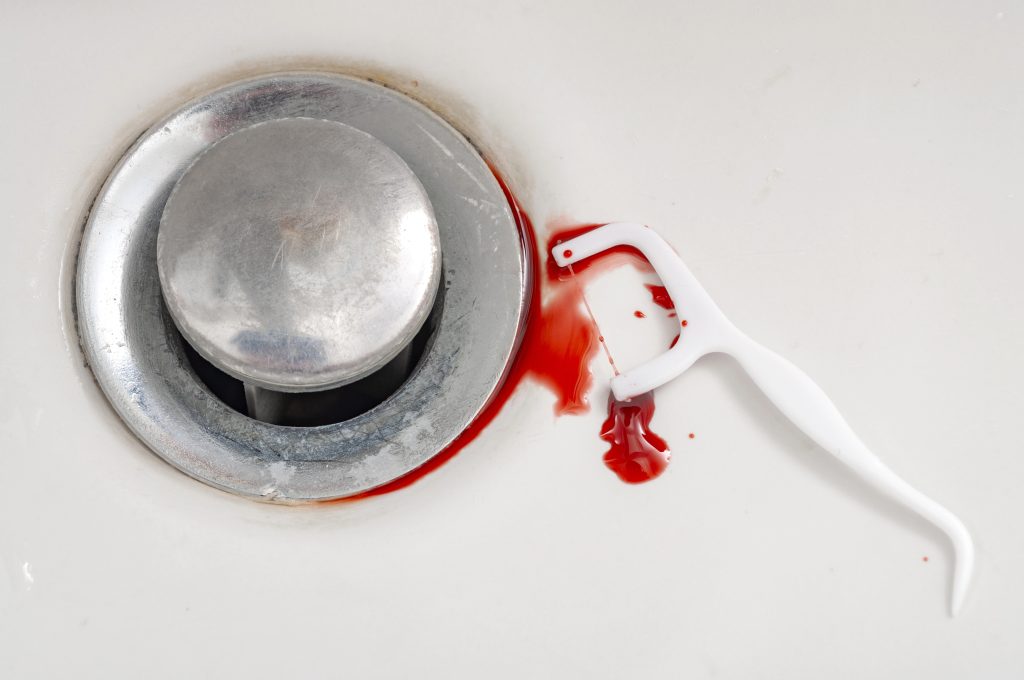
Gums are a relatively sensitive tissue, and while bleeding isn’t necessarily “normal,” it is common. Unfortunately, bleeding gums can be alarming, and many people may be scared away from flossing entirely if they see blood in the sink or on their floss.
However, bleeding gums are actually a clear sign that you need to be flossing more, not less. Finding the right tools can make this daily habit much more comfortable and even help to improve your oral health.
Why Flossing Can Actually Help Bleeding Gums
Brushing helps keep your teeth and gums clean and healthy, but brushing alone only reaches about 65% of your tooth and gum surfaces. In order to clean away small particles of food and microbes that cause plaque around your gums, you need to floss daily.
When plaque is allowed to sit along the gumline, the bacteria within it produce toxins that irritate gum tissue. This irritation causes the gums to become red, swollen, and prone to bleeding. These symptoms are known as gingivitis, which is the earliest stage of gum disease.
There are other reasons your gums may bleed besides gingivitis. Hormonal change can also contribute to bleeding gums. Puberty, pregnancy, and even peri-menopause can increase the likelihood of sensitive gum tissue that is more prone to bleeding. Additionally, certain medications or underlying health conditions can cause gums to bleed.
Types of Floss
Whether your bleeding gums arise from early gum disease or another reason, there are some things you can do to reduce the bleeding.
Don’t skip flossing! Neglecting your oral hygiene can make bleeding gums worse. Instead, start by considering the type of floss you use. There are many different types of floss out there, and choosing the right one can help you clean your teeth effectively while minimizing discomfort.
Unwaxed String Floss
Unwaxed floss is made from thin nylon strands. Because it is slightly thinner than waxed floss, it can fit into very tight spaces and is effective at gripping plaque. However, because it lacks a protective coating, it may not slide as well and can feel less gentle on gums.
Waxed String Floss
Waxed floss is standard nylon floss coated with wax. The wax allows the floss to slide more smoothly between the teeth. If your teeth are crowded tightly together, waxed floss is a good choice. It is much less likely to shred or break, and the smooth texture is gentle on gums.
Dental Tape
Dental tape is wider and flatter than standard string floss, almost like a small ribbon. Because of its flat shape, it glides very smoothly over the gum tissue and covers a larger surface area . Many patients with bleeding gums find dental tape to be the most comfortable string option, as it does not cut into the gums the way thin string floss sometimes can.
Water Flossers
A water flosser shoots a steady, pulsating stream of water between your teeth and along the gumline. Instead of scraping the plaque away, the water flosser washes the microbes and food particles away using water pressure. Water flossers are an alternative for patients who struggle with severe gum bleeding, as the water stream is gentle on inflamed tissue. They are also highly effective for patients with braces or dental bridges.
Floss Picks
Floss picks are Y-shaped tools with a short piece of floss attached to the two prongs. They can make flossing easier, especially for patients who have difficulty holding string floss. Floss picks are a good option for those with limited dexterity or for children learning to floss on their own. While they may not curve completely around the tooth like string floss, they can still be an effective tool.
Dental Picks
Dental picks resemble toothpicks, but they are made of soft rubber or silicone, so they are more gentle and flexible. They are very easy to hold and maneuver, even more so than floss picks, plus they make it easier to reach back teeth. Like floss picks, dental picks are less effective at getting to tight spaces between teeth than traditional floss.
Tips for Flossing with Sensitive Gums
Start by trying different types of floss to see which works the best for you. And remember, even with the best tool, proper technique is important. Be gentle and take your time.
Be sure to stay consistent. When you first begin a flossing routine, your inflamed gums may bleed easily. Fortunately, as you continue to clear away the irritating plaque each day, the
If you have been flossing daily for a few weeks and your gums are still bleeding, consider making a dental appointment. Contact our office today to schedule your next exam and get more advice on managing bleeding gums.